Monday, March 22, 2010

Raymond Scott for the accordion

Last year we offered in pdf format free vintage accordion charts for Scott's "Powerhouse" and "The Toy Trumpet." The offer stands.

Squeezebox practitioner Dionne Hauke (who received our charts) sends along the above ad from the back cover of an unrelated piece of 1940s sheet music. If you're aware of other Scott titles arranged for instruments other than piano or bands, please drop us a note.

Dionne Hauke (right), proprietor of Ziggie's Music, Phoenix AZ

Friday, March 19, 2010

THE WIRE Magazine Feature

The April 2010 print edition of THE WIRE magazine features an article/review about the new Raymond Scott film, DECONSTRUCTING DAD, directed by Stan Warnow, Scott's son. (Also featured in this issue: Joanna Newsome, Edgard Varèse, DJ Stingray, & others. A free 20-track CD is also included.) Meanwhile, THE WIRE's site is hosting an exclusive, specially-edited clip from the documentary here.
"The insights afforded by Raymond Scott's own son add shades of intrigue and pathos not found in the average music documentary."
—Richard Henderson, THE WIRE

Tuesday, March 09, 2010

ducks deluxe

So much more well-behaved than Daffy, it earned a halo: Columbia Records brochure from 1940, intended to promote a new Raymond Scott post-Quintette release, "Huckleberry Duck," which became one of the composer's best known orchestral titles. The artifact was reproduced in Alex Steinweiss, Inventor of the Modern Album Cover, a retrospective published in 2009 by Taschen Books.

Thanks to our friend Takashi Okada for the image

Thursday, February 04, 2010

Never Love A Stranger

Twenty years after Raymond Scott's brief stint appearing on-camera in Hollywood films with his Quintette, he was still occasionally scoring movie soundtracks. Here's the opening theme from 1958's NEVER LOVE A STRANGER, starring John Drew Barrymore, & Steve McQueen, sung by Scott's 2nd wife, Dorothy Collins: YouTube

Saturday, January 23, 2010

Dubby Sounds for Baby

Boston-based musician/producer DJ Flack (aka Antony Flackett), who is the father of young twins, has released DUBBY SOUNDS FOR BABY. The mix mashes tracks from Trigga, Mouse On Mars, & music from Raymond Scott's original SOOTHING SOUNDS FOR BABY records.
>> Listen: here

Friday, January 15, 2010

record collector's heaven

Jeff Winner of RaymondScott.com on a research expedition at UMKC's Marr Archives, June 2008, reviewing archival press clippings

The Raymond Scott audio collection (thousands of discs and tapes from 1930 to 1980) were donated to the Marr Sound Archives at the University of Missouri, Kansas City, in 1995. Here's a great 6-minute tour of the place, "Momentum and Marr," produced, directed, and edited by Jordan Kerfeld in 2008.

In the mini-doc, Marr director Chuck Haddix explains his mission: "I don't collect records—I collect collectors."

Hat tip to our buddy Mark Greenberg at the Mayfair Workshop blog for noting the video and providing a concise overview of what's in the collection. As a member of Chicago's legendary Coctails, Mark was in the forefront of the Scott revival. The band was performing "Powerhouse" in 1991, when Scott was still a forgotten footnote in music history.

Our Raymond Scott CD releases (on Basta) were compiled from recordings stored at Marr. On a number of occasions, Gert-Jan Blom, Jeff Winner, and I have conducted on-site audio archeology for such projects as Manhattan Research, Inc., Microphone Music, and Ectoplasm. More releases are planned; it's a deep collection of unheard music. Scott was a maniac about recording rehearsals, demos, radio airchecks, mic placement takes, and idea development. An electronica follow-up to Manhattan Research is in the pipeline.

Unfortunately, despite technological progress in field of archiving science, not everything can be restored and preserved:

Thursday, December 31, 2009

You're Invited To Spend New Year's Eve In A Haunted House

Like most of Raymond Scott's 1930s Quintette tunes, "New Year's Eve In A Haunted House" is a descriptive musical portrait of a specific fantasy. As Max "Bunny" Sparber observed, Scott "eschews the hammy organ and ghostly wailing typically associated with ghost-ridden mansions in favor of a sprightly horn-driven number. The piece could pass for a cheerful foxtrot, but for a single muted trumpet blast that interrupts the music with a moaning 'waah' sound and a percussion solo that includes an ominous chimes progression. There’s something haunting this song, that’s for sure; we should be grateful that it appears to be in a good mood." Welcome that good mood for the new year — watch > THIS < spirited live arrangement by Portland's Vagabond Opera.

Friday, December 25, 2009

Holiday Greetings from the Hit Parade Gang

Raymond and his Your Hit Parade costars insist the Christmas tree isn't the only thing in your house that should light up this holiday season. May Santa bring you a car-sized carton of Luckies.
Ironically, Scott did not smoke. But he probably didn't object to getting paid for endorsing the show's sponsor. Here's a video of Dorothy Collins singing holiday praises for the brand.

Sunday, December 20, 2009

The Beau Hunks Sextette: Powerhouse

Beau Hunks Sextette drummer Louis Debij leans into the "Powerhouse" 'B' section

Dutch TV footage of the original Beau Hunks Sextette's performance of Scott's "Powerhouse" from 1994 has been uploaded by designer/historian Piet Schreuders. The seg features some great camera angles of the players.

The band was originally called The Wooden Indians (after a Scott title) when their all-RS tribute CD, Celebration on the Planet Mars, was released by the VPRO that year. When it was reissued the following year on Basta, the band morphed into the BH6, an acknowledged spin-off of the much larger Beau Hunks Orchestra.

Bassist Gert-Jan Blom was in the vanguard of the RS revival. He first contacted me in 1992 after the release of the first Scott CD compilation, Powerhouse: Volume 1, which I co-produced in 1991 with Will Friedwald for the now-defunct Stash label. At the time, Scott was an obscure historical footnote; "Powerhouse" consisted of several melodies instantly familiar to every Earthling from its incessant use in Warner Bros. cartoons, but few knew its name or the composer. Gert-Jan recognized the importance of this music, and began to champion Scott in his native Netherlands in concert, on radio, and on CD. He was a significant force, along with Jeff Winner, in the first commercial release of Scott's historic Manhattan Research Inc. electronica from the 1950s and '60s.

Beau Hunks saxophonist Robert Veen has revived saxophone classics from the early 20th century on several of his own CDs

Friday, December 18, 2009

everything old is ... still old

When the Raymond Scott boomlet emerged in the early 1990s (print media still predominated), "clever" headline writers by the dozens resorted to a pair of first-thought cliches: "Great Scott!" and "That's Not All, Folks!" Great minds don't think alike; unimaginative ones do.

Now from our friend in Tokyo, Takashi Okada, comes proof that one of these shopworn teasers had gained RS-related currency decades ago (if not earlier). This Australia-released Coral "Little Album" (in the U.S. = EP, for extended play, longer than a single, shorter than an album) hit retail shelves down under in the mid-1950s:

The quartet of recordings originated on Scott's full-length orchestral U.S.-released LP, This Time With Strings (reissued on CD earlier this year thru Basta). Okada recently purchased this little-known artifact and provided us with scans. Here's the back cover:

"Pretty Little Petticoat" was an orchestral composition by Scott which was used for several years in the early 1940s as a radio theme. It is unrelated to 1939's "Pretty Petticoat," three versions of which appear on the Raymond Scott Quintette CD Microphone Music.

Monday, December 14, 2009

Merry Christmas & Happy Smoking!

One of Raymond Scott's earliest and most-successful commercial jingles was "Be Happy, Go Lucky" for Lucky Strike cigarettes. A special Christmas modification was made to the tune for the 1950s TV show, YOUR HIT PARADE. Watch here as YHP star (and Scott's second wife) Dorothy Collins explains the virtues of gifting your loved ones tobacco. Then check-out more Raymond Scott videos on our YouTube Channel. 

P.S. An interesting aside: the holiday version of the carton's packaging was crafted by another influential Raymond, the famous industrial designer Raymond Loewry.

Tuesday, December 08, 2009

Archeological stunner

Raymond Scott's "Powerhouse," composed in 1937, discovered in 1932 cartoon. Thanks to Miguel Malla, tenor saxophonist of the Spanish band Racalmuto, for the archival alert.

Saturday, December 05, 2009

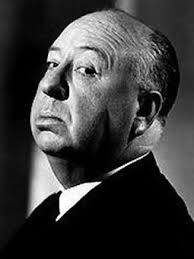
Trouble With Hitchcock

For years I've asserted that Six Degrees Of Separation can be reduced to two or three if Raymond Scott is in the equation. Case in point: Alfred Hitchcock's 1955 feature, THE TROUBLE WITH HARRY. This morbid comedy/murder mystery connects Scott to numerous Hollywood heavies including Shirley MacLaine (in her debut role), John Forsythe, legendary Academy Award-winning soundtrack composer Bernard Herrmann, and even a young Jerry Mathers (later a TV icon in the title role on LEAVE IT TO BEAVER).

Scott's song "Flaggin' The Train To Tuscaloosa" is sung by Forsythe's character, Sam Marlowe, early in the movie. According to an April 1955 Daily Variety news item, Scott originally composed the tune as a commercial jingle for the YOUR HIT PARADE television series (on which he conducted the orchestra during the decade). Variety noted that the melody had different lyrics for the commercial, with new words penned by accomplished songsmith Mack David for the Hitchcock film. (Mack is the brother of Hal David, who co-wrote with Burt Bacharach — another legend three degrees from Scott.)
ABOVE: from the opening credits
BELOW: Shirley MacLaine & John Forsythe are pictured on the cover of the piano sheet music