Showing posts with label commercials. Show all posts

Monday, April 12, 2010

She's A Doll!

Volume 3 of Raymond Scott's groundbreaking ambient electronic album series, SOOTHING SOUNDS FOR BABY, features a track titled "Little Miss Echo." In 1962, about a year before the series was released, a high-tech doll of the same name was introduced by the American Character Doll Company. Built into the Little Miss's chest was a miniature battery-powered tape machine controlled by a knob styled to look like a bow; the device would repeat up to 25 seconds of speech.

Scott had two young daughters at the time, and I speculated they might have owned the doll, but they don't recall it. Considering his lifelong fixation with all aspects of sound recording, it's likely Scott was intrigued by the novelty toy. Perhaps he was inspired by
this creepy TV commercial, or maybe it was just a coincidence. At any rate, Raymond would be shocked to know he himself is now a doll.


Monday, December 14, 2009

Merry Christmas & Happy Smoking!

One of Raymond Scott's earliest and most-successful commercial jingles was "Be Happy, Go Lucky" for Lucky Strike cigarettes. A special Christmas modification was made to the tune for the 1950s TV show, YOUR HIT PARADE. Watch here as YHP star (and Scott's second wife) Dorothy Collins explains the virtues of gifting your loved ones tobacco. Then check-out more Raymond Scott videos on our YouTube Channel. 

P.S. An interesting aside: the holiday version of the carton's packaging was crafted by another influential Raymond, the famous industrial designer Raymond Loewry.

Saturday, December 05, 2009

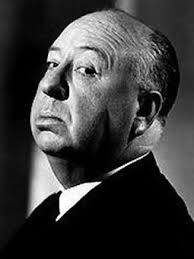
Trouble With Hitchcock

For years I've asserted that Six Degrees Of Separation can be reduced to two or three if Raymond Scott is in the equation. Case in point: Alfred Hitchcock's 1955 feature, THE TROUBLE WITH HARRY. This morbid comedy/murder mystery connects Scott to numerous Hollywood heavies including Shirley MacLaine (in her debut role), John Forsythe, legendary Academy Award-winning soundtrack composer Bernard Herrmann, and even a young Jerry Mathers (later a TV icon in the title role on LEAVE IT TO BEAVER).

Scott's song "Flaggin' The Train To Tuscaloosa" is sung by Forsythe's character, Sam Marlowe, early in the movie. According to an April 1955 Daily Variety news item, Scott originally composed the tune as a commercial jingle for the YOUR HIT PARADE television series (on which he conducted the orchestra during the decade). Variety noted that the melody had different lyrics for the commercial, with new words penned by accomplished songsmith Mack David for the Hitchcock film. (Mack is the brother of Hal David, who co-wrote with Burt Bacharach — another legend three degrees from Scott.)
ABOVE: from the opening credits
BELOW: Shirley MacLaine & John Forsythe are pictured on the cover of the piano sheet music

Friday, November 06, 2009

Egg Money


These two clever commercials for the UK-based Egg Bank have been perched on the web (and forgotten about, by us) for several years. Both spots feature super furry animals—in fact, some of the top names in the guinea pig acting community.

The musical scores are by Raymond Scott—specifically, two licensed tracks from Manhattan Research, Inc.: "Domino" and "Baltimore Gas & Electric," both composed and recorded in the early 1960s. Ironic that two works intended by Scott for commercials wound up almost 50 years later being used in ... commercials.

Friday, December 05, 2008

Ego Trip

Los Angeles based soundtrack musician Ego Plum, who scores the Nickelodeon cartoon series MAKING FIENDS, has slipped a Raymond Scott tribute into an episode.  It's a fake commercial for onions based on Scott's real 1960s commercial for Lightworks brand cosmetics, featuring series creator Amy Winfrey on vocals.  > > > View it: here

Wednesday, April 09, 2008

Jingle Workshop for hire


Paper 9" x 12" insert, included with promo-only LP, The Jingle Workshop Invites You To Listen To "Demo-A," a non-electronic "collection of jingles and musical commercials composed and musically produced by Raymond Scott" (ca. mid-1950s). Faded felt-tip line art per the original. If interested in having Scott record for you a charming jingle, contact Chuck Barclay at PLaza-7-5685.

Tuesday, November 20, 2007

"like robots or something"


"im about 80% sure that that isnt the correct song... thanks for the effort though... it may have been like a dexter's lab thing though..."

Like. But not.

Friday, June 01, 2007

Lunch


A Visa check card TV commercial ("Lunch") that runs on high octane "Powerhouse" has aired sporadically since November 2006. In case you still haven't seen it—or need to view it on demand—it's posted on YouTube. The recording of the Scott classic was created for the spot; no existing version was licensed.

Saturday, March 24, 2007

Lightworks


Raymond Scott composed an electronic commercial jingle for Lightworks cosmetics in the 1960s. Vocal and instrumental versions are featured on the two-CD set Manhattan Research, Inc. (MRI). The Lightworks line was produced by Helena Rubinstein, and included blush, eye shadow, lipstick, and lotions.

The Nashville-based trio Venus Hum recorded a note-perfect cover in 2003. You can download a free mp3 here.

There is some uncertainty about the origins of the Scott jingle. Untitled instrumental versions were discovered by MRI researchers/producers Gert-Jan Blom and Jeff Winner on an analog tape reel dated "1960-63." They also discovered, on another reel, an undated "Lightworks" vocal version. At the time, the singer was presumed (by me) to be Scott's then-wife Dorothy Collins, and was so noted in MRI's liner notes. However, RS and DC's daughter Deb later said the voice was not her mother's.

The Lightworks product line launched around 1967. Winner speculates that Scott adapted an early 1960s instrumental recording for the jingle.

"Some Scott commercials from this period were edited from raw, longer, sometimes rambling 'work-tapes' he'd made years before," Winner recently explained. "It's likely he composed and recorded these 'Lightworks' prototype instrumentals—including versions at different tempos—in the 1960-'63 period. Assuming he got the cosmetics gig later, he may have reached back for inspiration from himself. 'Lightworks' isn't unique in this sense. We included several other examples of this derivative process on the MRI cds. Scott often recycled material. All artists do."

The identity of the vocalist remains a mystery.